

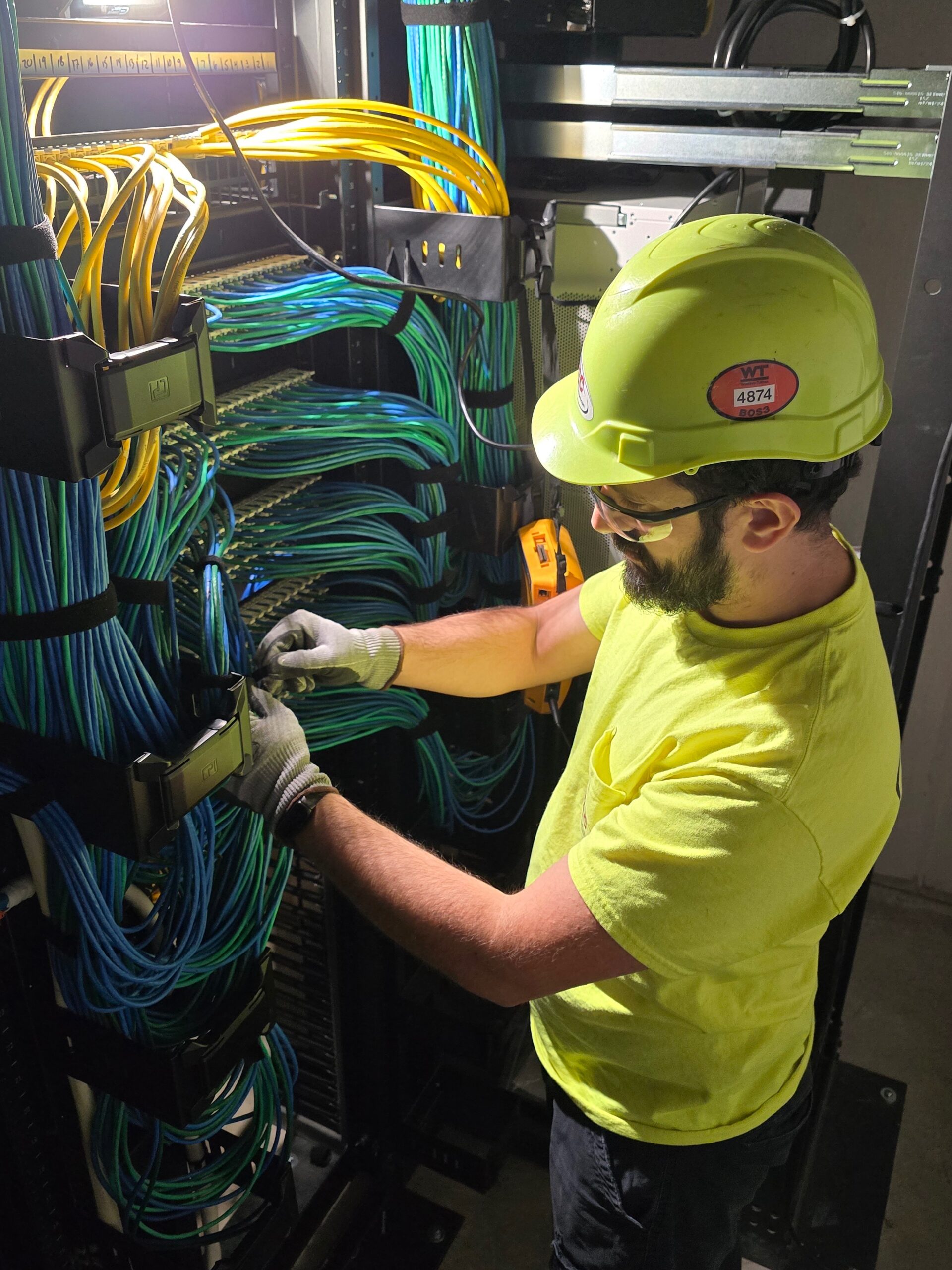
Why Structured Cabling Is Critical for Modern Commercial Buildings
What Is Structured Cabling and Why Does Your Business Need It?
In today’s connected workplace, nearly every business depends on reliable technology. Computers, phones, security cameras, Wi-Fi, access control systems, conference rooms, and cloud-based applications all rely on one thing behind the scenes: a well-designed structured cabling system.
While cabling may be hidden behind walls or above ceilings, it plays a critical role in the day-to-day operation of your facility. A clean, organized structured cabling system not only improves network performance but also reduces downtime, simplifies maintenance, and prepares your business for future growth.
What Is Structured Cabling?
Structured cabling is a standardized system of cables, connectors, patch panels, and network hardware that provides the foundation for your building’s communications infrastructure.
Instead of installing separate cables for every individual device or system, structured cabling creates one organized network that supports multiple technologies, including:
- Computer networks
- Wi-Fi access points
- VoIP telephone systems
- Security cameras (CCTV)
- Card access and access control systems
- Audio-visual systems
- Building automation and smart building technologies
- Data centers and server rooms
A properly designed structured cabling system allows all of these systems to work together efficiently while making future upgrades much easier.
Why Organization Matters
It’s common to see network closets filled with tangled cables that have accumulated over the years. While it may still function, poor cable management can create unnecessary problems.
A neat and organized cabling system offers several important benefits.
Improved Reliability
Properly installed and labeled cables reduce the chance of accidental disconnections, damaged wiring, and signal interference. This helps keep your network operating at peak performance while minimizing unexpected outages.
Faster Troubleshooting
When every cable is labeled and routed correctly, technicians can quickly identify issues without spending hours tracing wires. This means less downtime and lower service costs.
Easier Expansion
Businesses are constantly evolving. Whether you’re adding new employees, installing security cameras, expanding Wi-Fi coverage, or upgrading conference rooms, a structured cabling system makes it simple to add new devices without disrupting existing operations.
Better Airflow and Equipment Protection
Organized network racks allow for improved airflow around servers, switches, and other networking equipment. Better cooling helps extend equipment life and reduces the risk of overheating.
Professional Appearance
Your IT room reflects the quality of your infrastructure. Clean cable management demonstrates professionalism and provides confidence that your critical systems have been installed correctly.
The Hidden Costs of Poor Cabling
Messy cabling doesn’t just look unprofessional—it can become expensive.
Poor cable management often leads to:
- Longer troubleshooting times
- Increased labor costs
- Higher risk of accidental cable damage
- Reduced network performance
- Difficult equipment upgrades
- Increased downtime during repairs
Many businesses don’t realize how much time and money is lost simply because technicians have to untangle or identify unlabeled cables before making repairs.
Planning for Future Technology
Technology continues to evolve, and your cabling infrastructure should be ready to evolve with it.
A professionally designed structured cabling system supports future growth by accommodating:
- Faster network speeds
- Smart building technologies
- Cloud-based communications
- Artificial intelligence applications
- Advanced security systems
- Video conferencing and collaboration tools
- Additional workstations and office expansions
Installing quality cabling today helps avoid costly rewiring projects tomorrow.
Why Professional Installation Matters
Structured cabling is more than simply pulling cable through a building. Proper installation requires careful planning, industry standards, testing, labeling, and documentation to ensure long-term performance and reliability.
An experienced contractor will evaluate your facility, design a scalable infrastructure, organize equipment racks, properly terminate and certify cables, and provide clear documentation that makes future maintenance easier.